Countryside meets Climate Change: The Destructive Natural Relationship
People usually admire the countryside for its peaceful surroundings, away from noises, pollution, and destruction – not until Climate Change happens.
Roofless, powerless but not hopeless. For more than a thousand households in Barangay Tiling in Cauayan town, some 130 kilometers south of capital Bacolod City in Negros Occidental, as if COVID-19 is not hard enough to bear, Typhoon Odette came a week shy of the Christmas and New Year revelries. In the wake of the havoc wreaked by Typhoon Odette and the threats of the persisting pandemic, residents remained in the dark, roofless with no electricity and very scarce to no source of drinking water.


The Philippines’ 15th tropical cyclone in 2021- Odette – left Filipinos especially in the Visayas and Mindanao regions with casualties and damage to properties including electric posts brought to the ground, thus rendering several households, like in Barangay Tiling to celebrate the festive and colorful December with candles, gas lamps and modest close to none food on the supposedly overflowing bounty on their tables.
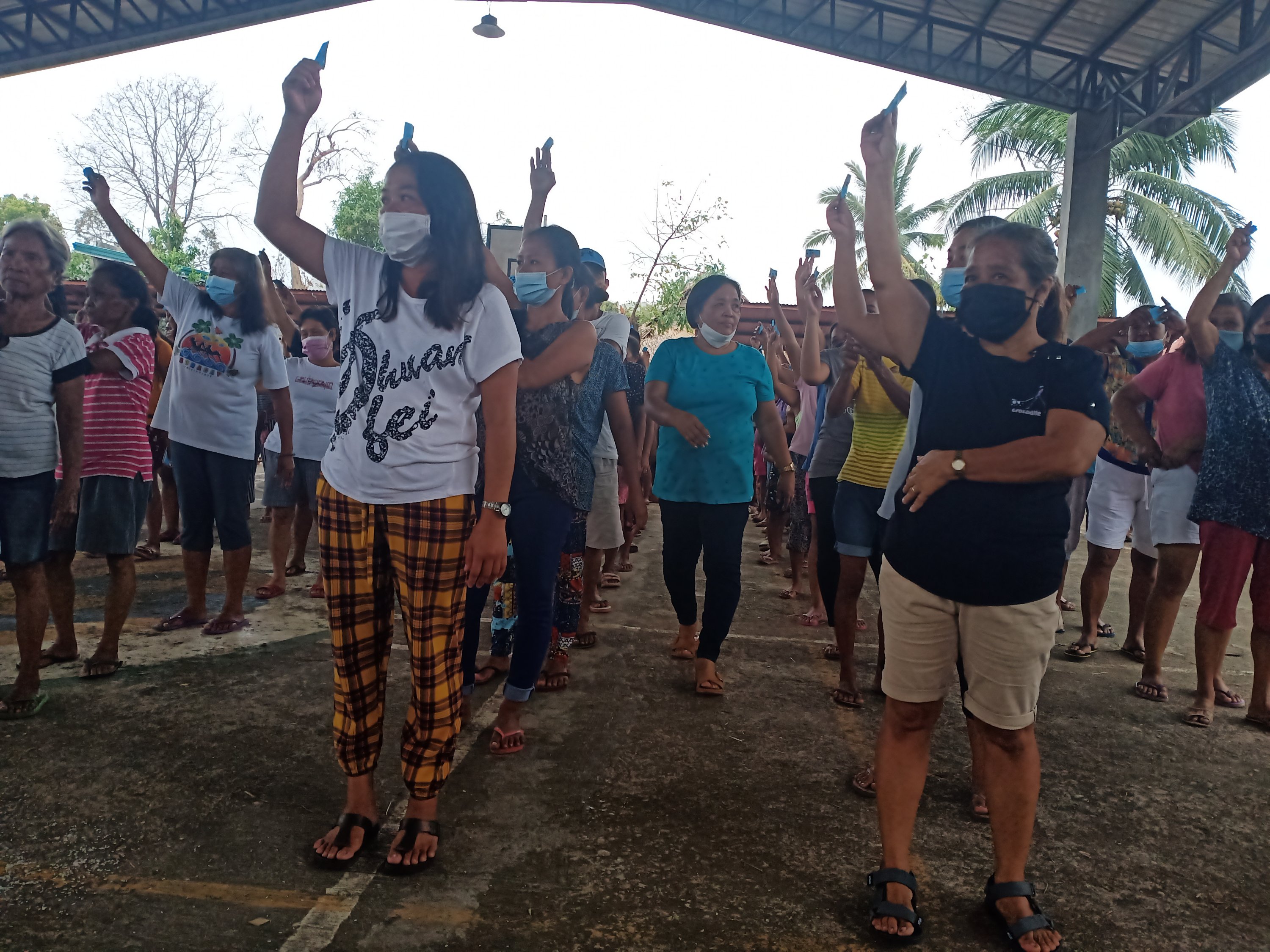
“Coconut trees were uprooted and have fallen under several houses to destruction especially in rural areas of the barangay. Food crops – corns, bananas, and sugarcanes – were damaged and commercially futile,” Maricho Carbaquil, Barangay Captain of Barangay Tiling shared during a relief operation held at the Barangay covered court courtesy of the Negros Occidental High School Batch 85 (NOHS Batch 85).
Kapitana Maricho added that as a precaution right before the typhoon hits, the Barangay immediately signaled its residents to evacuate in their covered court, especially those who are in landslide-prone and coastal areas, however those communities living in farther rural side of the barangay didn’t anticipate the severity of the super typhoon.


Fortunately, all residents have been evacuated and put to safety, “despite the onslaughts [of super typhoon Odette] and its upsetting aftermath, we have zero casualties,” village chief Maricho said with relief and elation, “and to that we are thankful.”

That unstoppable danger brought by Typhoon Odette to the rural residents proves the fact that the countryside is not always in peace, solace, and abundance of food resources. It can definitely be a stage for natural disasters to perform their merciless destruction and ruin the natural beauty of meadows, streams, and mountains, where the livelihood and sustenance of the people are being rooted from.
Typhoon Odette happened because of one powerful force, and that is undeniably, the Climate Change. According to Roberto Alaban Jr., an Environmental Science professor at University of St. La Salle, the term Climate Change means “changes in the parameters of long-term weather patterns”.
One of the top effects of climate change is the rising of temperature which begets melting of ice, and as more ices continue to melt, the rise in sea water levels happens. Rising sea water are premonitions of super typhoons that can have the strength of wiping houses, and even one whole community, which did become a reality in the countryside of Barangay Tiling.

Alaban cited that the main players of changes in our climate are “the so-called anthropocentric causes meaning human activities, basically burning of fossil fuels for our vehicles.” With all those climate changing actions that usually happen in the big cities, the farthest countryside, being silent and calm, is still not exempted to receive the consequences of those anthropocentric movements coming from the urban world.
“Climate is unpredictable, so they affect the schedule of farming. Farmers expect rain to come in June, so they are preparing their fields for that, but there’s no rain. For the sugar industry, they’re expecting that by January it is already dry, so that they can cut their canes, but as what we are experiencing right now, it’s January and there is still a lot of rain,” Alaban further explained, highlighting the effects of climate change in the countryside.

He added that “there is also a big effect on water resources, it is now more difficult to get water; water sources that have abundant water before, has smaller volumes of water coming out, we have to dig deeper to get same amount of water, so that would add up to the cost of getting water for food production, and temperature also affect the growth of plants, so if it’s too hot and you expect a bigger harvest, you’ll get a smaller one, so that is also very detrimental to farmers.”


Indeed, the countryside cannot bear too many bullets of climate change, because with one super typhoon, forests can be deserted with trees, blue waters in the streams can be turned into muds, and food crops can be considered as wastes, and lives can be lost.
The distance of the countryside from pollution from big factories, cars, and tons of urban trash does not stop the climate change to make its presence and destruction be felt by the hills, sugarcane landscapes, and hidden springs. With that, people – both in urban cities and in the countryside – should take responsible actions such as managing wastes properly, reducing use of plastics, growing their own food, and simplifying one’s life to consume less resources and preserve more natural riches -simple actions that can create powerful solutions.


If we won’t live with environmental accountability for our countryside, the rural residents will not only be roofless and powerless but also hopeless at the same time. The serenity of green meadows and the lullabies of gentle winds in the mountains will only be a dream when the time comes.
“The Earth will still be here, the question is, would humans be there?” Alaban professed.
WATCH the full story here:
 Green Escape